 Grace Morgan
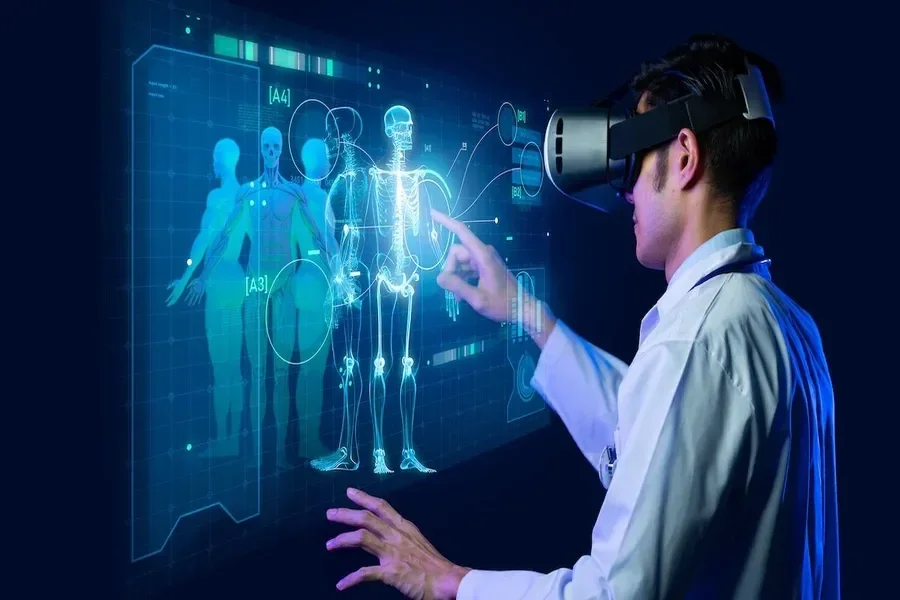
Hospitals and clinics are delivering faster and more accurate diagnoses today than they did just five years ago, largely because artificial intelligence works alongside doctors to interpret medical images, detect patterns, and identify diseases before they advance. Artificial intelligence has moved from research labs into clinical practice, transforming how healthcare providers approach diagnosis across multiple disciplines. This shift represents a fundamental change in diagnostic workflow, accuracy, and patient outcomes. Understanding these key ways artificial intelligence is reshaping digital diagnostics reveals both the current impact and the future trajectory of modern medicine.
Medical imaging generates enormous volumes of data every day
Medical imaging generates enormous volumes of data every day. Radiologists must review thousands of X-rays, CT scans, MRI images, and ultrasounds, each requiring careful attention to detect abnormalities. Artificial intelligence algorithms trained on millions of annotated images can now assist in this interpretation process, identifying suspicious patterns that might warrant further investigation.
For example, these systems can flag potential tumors in mammography images or detect early signs of pneumonia in chest X-rays. These systems work by learning the visual characteristics of diseased tissue versus healthy tissue, allowing them to spot subtle variations that human eyes might miss during routine review. The result is faster image analysis, reduced diagnostic delays, and a secondary verification layer that improves overall accuracy.
Pathologists traditionally examine tissue samples under microscopes to diagnose cancer and other diseases, a process that is labor-intensive and subjective. Digital pathology, augmented by artificial intelligence, is changing this landscape significantly. Algorithms can analyze histopathology images to identify cancer cells, classify tumor types, and even predict disease progression, processing entire tissue slides in minutes compared to hours of manual examination.
During high-volume case processing and tissue classification workflows,
During high-volume case processing and tissue classification workflows, laboratories rely on pathology software to manage specimen tracking, reporting, and integration with image analysis tools. Artificial intelligence can also flag areas of concern for human pathologists to review, ensuring that no suspicious regions go unnoticed while reducing redundant examination time. For oncology in particular, this capability is transformative, as accurate pathological diagnosis directly influences treatment decisions.
Beyond analyzing existing images or samples, artificial intelligence excels at identifying patterns in patient data that suggest disease risk before symptoms appear. Machine learning models can process electronic health records, lab results, genetic information, and lifestyle factors to predict which patients are most likely to develop conditions like diabetes, heart disease, or kidney failure. This predictive capability enables clinicians to intervene earlier, recommend preventive treatments, or increase monitoring for high-risk individuals.
For example, these systems can flag patients whose vital sign patterns suggest they may deteriorate, allowing hospital staff to act proactively. Early detection changes clinical outcomes dramatically, transforming patients from those who present with advanced disease to those caught at more treatable stages. This shift from reactive to proactive medicine represents one of the most significant advances in diagnostics.
Artificial intelligence is not solely about improved accuracy, as it
Artificial intelligence is not solely about improved accuracy, as it also streamlines clinical workflows. Automated systems can prioritize urgent cases, route images to appropriate specialists, and integrate diagnostic findings directly into electronic health records. When a patient arrives at the emergency department with chest pain, algorithms can rapidly assess the severity of imaging findings and alert the cardiac team immediately if concerning patterns are detected.
This reduces the time between image acquisition and clinical decision-making, which is critical in acute care settings. Furthermore, these systems can handle routine screening cases independently, allowing human experts to focus on complex or ambiguous cases that require their judgment and experience. This division of labor increases throughput without compromising quality.
Once a diagnosis is made, artificial intelligence analysis can extend into treatment planning by identifying which therapeutic approaches are most likely to succeed for a specific patient. For cancer patients, algorithms can analyze tumor characteristics, genetic mutations, and patient factors to recommend precision medicine approaches. These systems learn from outcomes across large patient populations, identifying patterns in which patients benefit most from particular treatments.
Such personalization means a patient diagnosed with a specific cancer
Such personalization means a patient diagnosed with a specific cancer subtype receives recommendations tailored to their tumor’s molecular profile rather than one-size-fits-all protocols. This capability reduces unnecessary treatments, minimizes adverse effects, and improves survival rates. As more clinical data accumulates, these systems become increasingly sophisticated in their recommendations.
Artificial intelligence is fundamentally transforming digital diagnostics through faster image analysis, enhanced pathology interpretation, predictive disease identification, optimized workflows, and personalized treatment guidance. These applications represent the current state of artificial intelligence in clinical practice, and the technology continues to evolve rapidly. Healthcare systems adopting these tools are already seeing measurable improvements in diagnostic accuracy, patient wait times, and clinical outcomes.
The integration of artificial intelligence into diagnostic workflows does not eliminate the need for human expertise. Rather, it augments physician judgment, handles routine tasks efficiently, and allows clinicians to spend their time on complex cases requiring human reasoning and decision-making. As these technologies mature and become more widely available, computer-assisted diagnostics will likely become the standard of care across most medical specialties, reshaping how patients are evaluated and treated.