
 Editorial Team
Remote work gives employees the flexibility to work from home, but it also introduces notable operational limitations. While in-person office environments make it easy for colleagues to coordinate tasks naturally, remote teams face hurdles where messages, calls, and updates are easily missed. This friction leaves team members out of the loop and causes widespread confusion.
To counter this, remote teams share the right information through the most appropriate channels while ensuring every team member clearly understands their responsibilities. Effective communication is not about demanding constant availability or creating digital surveillance; instead, it is fundamentally about clarity, accountability, and sustainable productivity.
How Effective Communication Helps Remote Teams
Structured communication directly reduces avoidable mistakes, while regular updates and constructive feedback continuously improve work quality. Furthermore, effective communication ensures that decision-making happens much faster, eliminates duplicated tasks, and significantly improves cross-team coordination. When everyone operates from the same playbook, projects flow smoothly from initiation to completion.
-
Fewer Mistakes: Clear instructions and centralized documentation prevent misinterpretations.
-
Accelerated Decisions: Defined workflows ensure approvals and choices happen without unnecessary bottlenecks.
-
Eliminated Redundancy: Transparent task ownership stops teams from accidentally duplicating work.
Communication Best Practices for Remote Teams
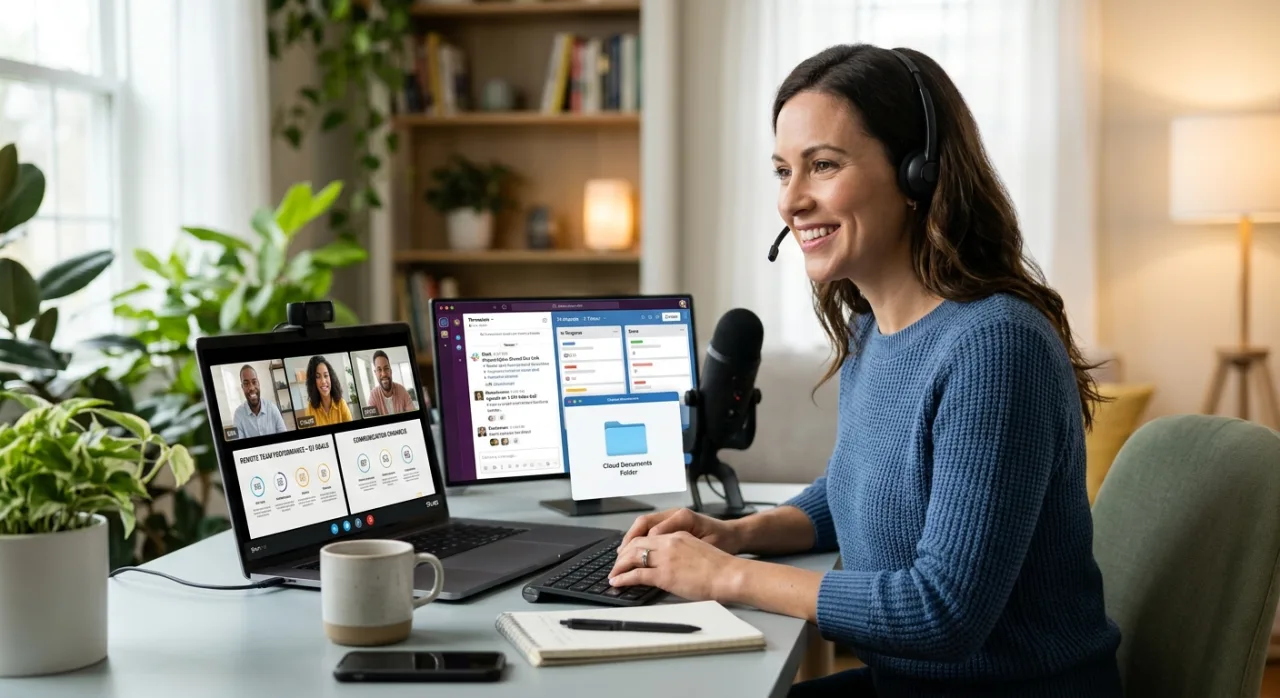
Teams establish baseline communication rules that dictate when employees respond, how quickly urgent matters need attention, and where specific project information belongs. Setting these ground rules early prevents endless searching and reduces administrative fatigue.
Ensure Clear Expectations and Responsibilities
Effective communication guarantees that project goals, deadlines, and specific deliverables are explicitly defined rather than left ambiguous. Team members always know whom to contact when a decision stalls or a task hits a technical roadblock.
Opt for the Right Communication Channel
Matching the message to the medium is vital for remote efficiency.
| Communication Channel | Best Used For | Key Practice |
| Formal company updates and external correspondence | Keep subject lines clear and action-oriented | |
| Shared Documents | Ongoing reference and living project files | Maintain a centralized, organized folder structure |
| Instant Messaging | Quick coordination and fast replies | Use threads to keep conversations organized by topic |
| Video Calls | Complex discussions requiring nuance and visual context | Always set an agenda and limit attendee lists |
Balance Synchronous and Asynchronous Communication
-
Synchronous Communication: Takes place in real time through video calls or live chats for urgent problem-solving.
-
Asynchronous Communication: Happens when people respond according to their own work schedules, allowing deep focus time without constant interruption. Written updates, threaded messages, and recorded video walkthroughs are effective ways to share information while avoiding unnecessary meetings.
Document Key Decisions
Maintaining a centralized location for meeting notes, project updates, and ownership lists is essential. Centralized documentation creates a structured, transparent way of working that benefits everyone, especially across different time zones.
Build Trust Through Feedback and Check-Ins
Communication functions as a two-way process. Managers regularly share expectations and constructive feedback, and employees feel fully empowered to ask questions, raise concerns, and propose workflow changes.
Organizations hold consistent weekly one-on-one conversations, maintain short project check-ins, and schedule private discussions when performance issues arise. Leaders focus on actual outcomes rather than monitoring an employee’s green online status indicator. Checking in regularly about workloads, obstacles, and support needs encourages honest feedback without blame. Additionally, remote employees have equal access to recognition and professional development opportunities.
How Virtual Office Services Can Help Remote Business Communication
Internal team communication mirrors how a business presents itself to the outside world. Remote employees collaborate effectively among themselves, yet still need a reliable, professional process for handling incoming customer calls and business correspondence.
A virtual office with a receptionist solves the need for professional call handling without requiring the overhead of maintaining a traditional staffed office. A comprehensive service package includes dedicated call answering, professional message handling, and a consistent customer contact experience.
Virtual office services do not replace project management systems, team meetings, or clear internal communication policies; rather, they serve as a valuable complement that reinforces overall business professionalism.
Common Remote Communication Mistakes
Certain habits undermine team performance even when organizations invest in modern communication tools. Avoid these common pitfalls:
-
Scheduling too many meetings without a clear agenda.
-
Sending vague messages lacking necessary context.
-
Expecting immediate responses outside standard office hours.
-
Keeping critical project information locked inside private chats.
Teams prevent these traps by establishing a short written communication agreement and reviewing it periodically whenever workflows, team size, or operational time zones change.
Evaluate Whether Your Communication Strategy Is Working
Businesses continuously evaluate whether internal communication strategies deliver expected outcomes. Useful metrics to track include:
-
Project completion rates and missed deadlines
-
The amount of rework required
-
Total meeting time and frequency
-
Response delays for urgent issues
-
Qualitative employee feedback
These indicators are interpreted together rather than in isolation. For example, reducing the number of meetings is only beneficial if decisions remain transparent and projects continue to progress steadily.
Conclusion
Managing remote work successfully requires companies to articulate clear expectations, utilize the right communication channels, document information meticulously, and provide ongoing feedback. Offix Solutions provides virtual office support that helps businesses maintain a professional presence while operating entirely remotely.