
 Clara Bennett
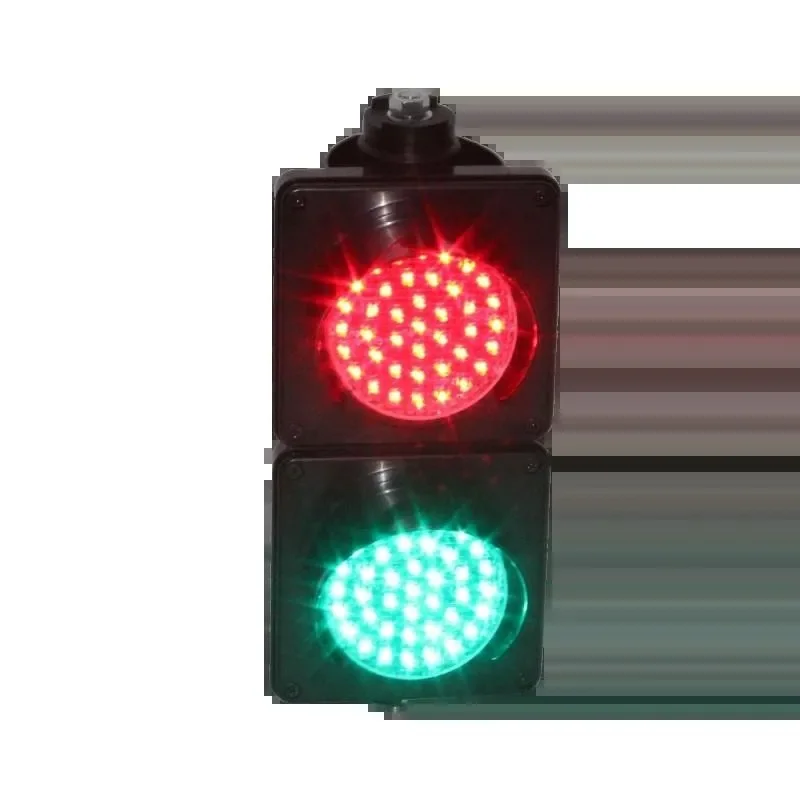 Not every traffic decision needs a full-size intersection signal. A parking garage exit, a loading dock or a gated community entrance needs a simple red-or-green answer in a compact package. The 100MM two-aspect traffic light fills that gap: a miniature two-lamp signal built for private and light-commercial sites where space is tight and clarity matters most.
What Two Aspects Means
Two aspects means two lamps, red and green. Red means stop and green means go, a signaling language every driver understands instantly. Unlike a single-aspect unit, it communicates both conditions explicitly, which removes the ambiguity of a dark signal. If green is lit, proceed. If red is lit, wait. If the signal is dark, something is wrong and drivers know to take extra care. That clarity is why two-aspect units are so common in access control.
Where These Signals Are Used
Parking facilities, warehouses and many other private sites rely on these units:
- Parking facilities: entry and exit lanes, often paired with automatic barrier arms or ticket machines. They stay red while the barrier is down and switch to green when it lifts.
- Warehouses: busy dock doors and indoor aisle crossings where forklifts, trucks and pedestrians share space.
- Gated communities and industrial parks: guard checkpoints.
- Car washes, drive-through lanes and industrial weighbridges follow the same pattern.
Wherever vehicles must take turns through a tight choke point, a compact two-aspect signal beats a human flagger on cost and consistency, and it never takes a break.
Size and Power
Scale matters. A 100-millimeter lens is legible at the short distances typical of private sites, usually 20 to 50 meters, and small enough to mount on a slim post, a concrete wall or a barrier housing. Full-size 200 or 300 millimeter intersection signals would be overkill, dominating the site and costing more to power. Modern LED versions draw only a few watts per lamp, so they run on low-voltage supplies or small solar kits at remote gates, saving trenching and wiring costs.
Integration and Reliability
Integration is straightforward. Most units take low-voltage DC or mains AC through a simple two-channel input: energize red or energize green. They pair with inductive loop detectors, push buttons, timers and access control panels. A good unit has protective visors for sunlight readability, a sealed housing against rain and dust, and LED lamps rated for tens of thousands of hours. Reliability is essential, because a signal that burns out every month is a worse hazard than none.
Pairing With a Security Barrier
The most common installation pairs the signal with an automatic security barrier. A central controller drives both: a lowered barrier means red, a rising barrier triggers green. Interlocking them through a single relay ensures they never give conflicting instructions, a dangerous failure that causes avoidable accidents. Some sites add a flashing amber phase while the barrier moves. Whatever the logic, technicians should test the full sequence, including normal operation, power failure and sensor failure, before opening the lane to live traffic.
When to Choose Two Aspects
If a checkpoint has exactly two states, go and stop, a two-aspect signal is the honest choice. Single-aspect units suit warning applications where only one condition needs flagging. When in doubt, two aspects remove the guesswork, and an unambiguous signal is easier to defend in liability terms. Since a two-aspect unit costs little more than a single-aspect one, the upgrade is cheap insurance.
Why LEDs Changed Everything
Two decades ago these signals relied on fragile incandescent bulbs that burned out yearly, drew substantial power and dimmed with age. LEDs changed that. They last tens of thousands of hours, draw only a few watts, switch on and off instantly for crisp flashing, and have no filaments to break under vibration. They run cool enough for sealed plastic enclosures and make battery backup and solar operation practical. Replacing an old incandescent unit with an LED version typically pays for itself on the first avoided maintenance visit, before counting energy savings.
Maintenance
Maintenance is light but still necessary:
- Each month, check that both lamps reach full brightness and that the control sequence runs without hesitation. Wipe the lenses, because road grime and dust cut visibility faster than LED aging does.
- Each year, check bracket tightness and cable entry seals, especially in coastal or high-vibration locations.
- Keep a spare unit or lamp module on the shelf, since a failed signal at an active security gate is a real liability.
Five minutes a month buys years of uneventful service.
Standardize Across the Site
On new sites, standardize on one trusted model across the property. Uniform spare parts, wiring schematics and troubleshooting procedures are worth far more than any small per-unit saving from mixing brands.