
 Clara Bennett
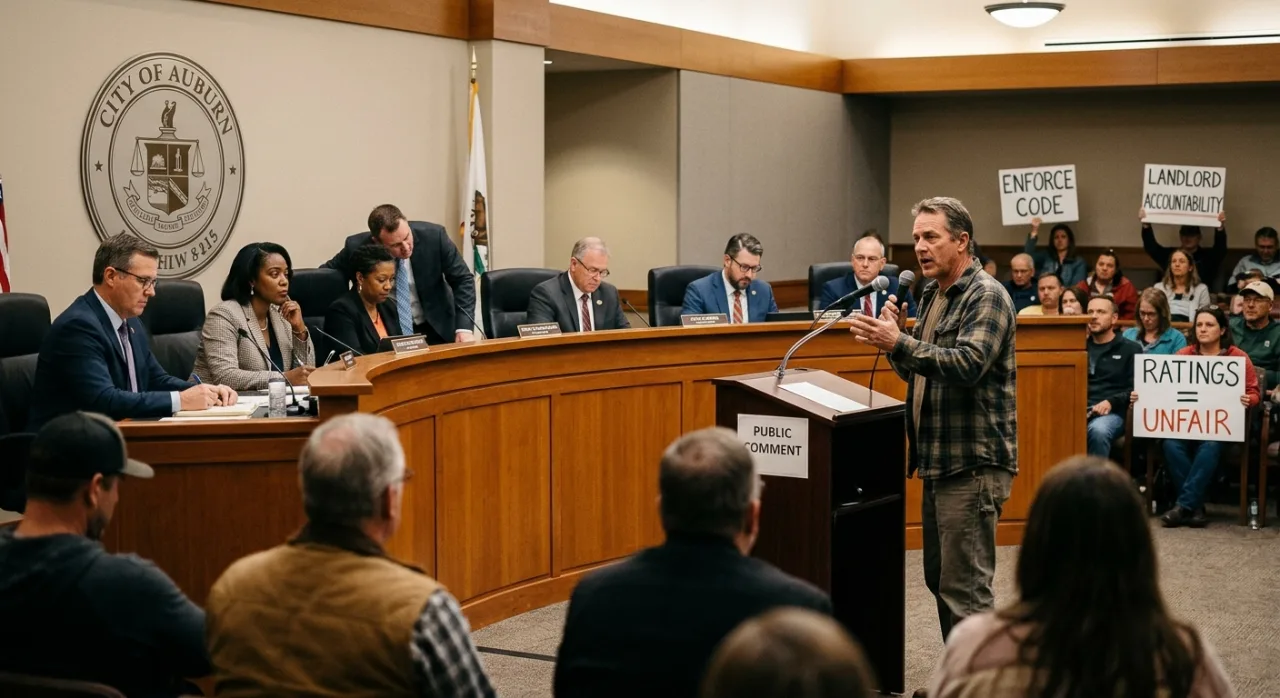
A recent Auburn City Council meeting became a flashpoint for long-simmering tensions between residents, landlords, and city officials, exposing a dramatic rift over how to manage the city’s housing stock. While the council currently maintains its public commitment to balanced solutions, this dialogue laid bare deep distrust of existing city functions.
Here is an analysis of the specific, sharp disagreements and proposed structural changes.
A Narrative of Two Communities: Negligence vs. Fairness
The session quickly polarized around specific grievances, pitting advocates of stricter, definitive government action against property owners who feel uniquely vulnerable to administrative bias.
The tone of the discussion dramatically escalated, forcing the council to confront a stark truth: many residents find current enforcement mechanisms utterly ineffective, while many landlords view new oversight proposals as inherently unfair.
Resident Outrage and Landlord Frustration
Local residents are actively demanding stronger, faster enforcement. Landlords, conversely, are raising significant concerns about new regulatory platforms—specifically the potential for a public grading or rating system.
While city administration has previously confirmed it is exploring peer-city models (like Rochester), no definitive landlord grading system has yet been enacted.
The core conflict resides in the perceived utility of current tools:
| Group | Central Perspective | Key Complaint |
| Residents / Tenants | The city needs teeth, not more systems. The Building Blocks platform—currently providing expanded public access to rental records—offers transparency, but transparency isn’t enforcement. | Tenants endure unsafe, substandard properties with unresolved violations out of fear of swift retaliation from owners. Current enforcement timelines and follow-through are seen as fundamentally ineffective. |
| Landlords / Owners | A grading algorithm cannot capture operational nuance. Assigning a public score is likely to misrepresent an owner’s actual performance, maintenance efforts, and intent. | Any scoring must allow proactive owners to formally appeal unfounded complaints or negative data (like police calls for disruptive tenants the owner is trying to evict) before public publication. |
“Working-Class Right to livable, affordable housing is vital.”
Specific Allegations and Systemic Failure
The demand for accountability took on definitive contours when resident (and fellow landlord) James Udall delivered biting criticism of Auburn’s current operational efficacy. He argued that new rules are entirely pointless until the city perfects its basic follow-through.
He cited specific, illustrative, and concerning examples of perceived systemic neglect:
-
Systemic Accountability: Udall questioned how properties are permitted to change ownership while carrying substantial, unpaid city property taxes. This practice, he alleged, demonstrates a fundamental breakdown in basic city coordination.
-
The Seminary Street Example: Udall definitively alleged a property on Seminary Street has operated for approximately 20 months without a current, valid certificate of occupancy. (These comments are recorded as public testimony; the council made no formal legal findings on these allegations).
Udall’s Solution: The City Must Institute Mandatory Verified Tax Clearance.
To combat this pattern, Udall proposed a strict new policy: The city must require verified tax clearance documentation before any real estate deed can be officially recorded with the municipality.
A Path Forward? Reactivating the Housing Committee
The path toward structural resolution appears to lie with Councilor Rhoda Overstreet-Wilson. Her formal advocacy focuses on leverage, rather than creation.
She arrived ready to propose legislation for a new housing committee, only to discover a dormant designated municipal housing committee already exists. Her push is now definitive: City officials must breathe life into this existing body.
| Recommendation | Scope | Goal |
| Reactivate | This committee should not be another empty gesture; it must possess a meaningful mandate. | Evaluate rental conditions by leveraging vast data already collected (inspections, code enforcement). Focus on helping renters trapped by violations or missing documentation. |
| Guided Focus | Overstreet-Wilson stated the joint city-county housing study should serve as the foundational guide for the committee’s scope. | Develop a coordinated, strategic approach with clear responsibilities and measurable benchmarks, rather than hasty administrative growth. |
The Next Critical Decisions for the Council
While she did not introduce a formal motion to reactivate the committee during this session, the council has reached a crossroads where it faces critical decisions regarding:
-
What specific powers and duties the reactivated committee should possess.
-
How to formally translate the comprehensive housing study’s findings into enforceable local action.
-
How to balance valid landlord concerns about rating clarity and the immediate need for tenant safety and stability.